October 13, 2025

Surah Al-Anbiya, Ayah 87

وَذَا النُّونِ إِذ ذَّهَبَ مُغَاضِبًا فَظَنَّ أَن لَّن نَّقْدِرَ عَلَيْهِ فَنَادَىٰ فِي الظُّلُمَاتِ أَن لَّا إِلَٰهَ إِلَّا أَنتَ سُبْحَانَكَ إِنِّي كُنتُ مِنَ الظَّالِمِينَ
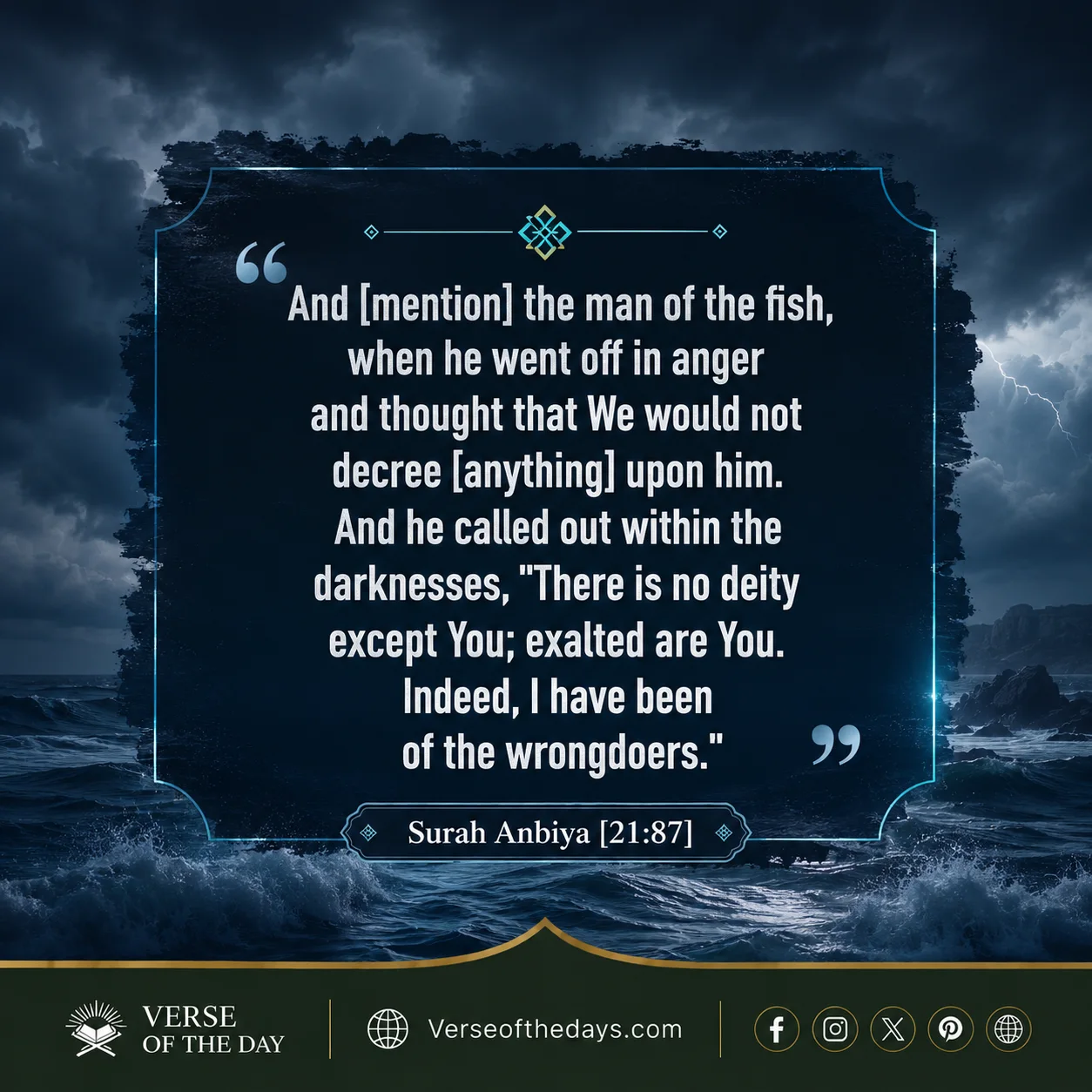
And [mention] the man of the fish, when he went off in anger and thought that We would not decree [anything] upon him. And he called out within the darknesses, "There is no deity except You; exalted are You. Indeed, I have been of the wrongdoers."
اور مچھلی والے کا ذکر کرو جب وہ غصے میں چلا گیا اور سمجھا کہ ہم اس پر قابو نہیں پا سکیں گے، پھر اس نے اندھیروں میں پکارا کہ 'تیرے سوا کوئی معبود نہیں، تو پاک ہے، بے شک میں ظالموں میں سے تھا۔'
Surah Al-Anbiya Verse 87

Explanation

This verse recounts Prophet Jonah's (Yunus) experience when he left his people in anger before receiving Allah's permission, was swallowed by a whale, and found himself in multiple layers of darkness (night, sea, and whale's belly). His prayer from this desperate situation contains three elements: declaration of Allah's oneness (La ilaha illa anta), glorification of Allah (Subhanaka), and acknowledgment of his own wrongdoing (inni kuntu min az-zalimin). This prayer demonstrates perfect repentance - recognizing Allah's sovereignty, praising Him despite personal distress, and taking responsibility for one's mistakes. The "darknesses" represent both physical and spiritual crisis. This teaches that sincere repentance can reach Allah from any situation, that acknowledging our mistakes is essential for forgiveness, and that even prophets needed to seek Allah's forgiveness when they erred. The prayer became a model for seeking Allah's help during extreme difficulties.

Context

This verse appears in Surah Al-Anbiya (The Prophets), recounting Jonah's experience in the whale. His prayer demonstrates sincere repentance and became a model for seeking Allah's help in difficulties.

Categories