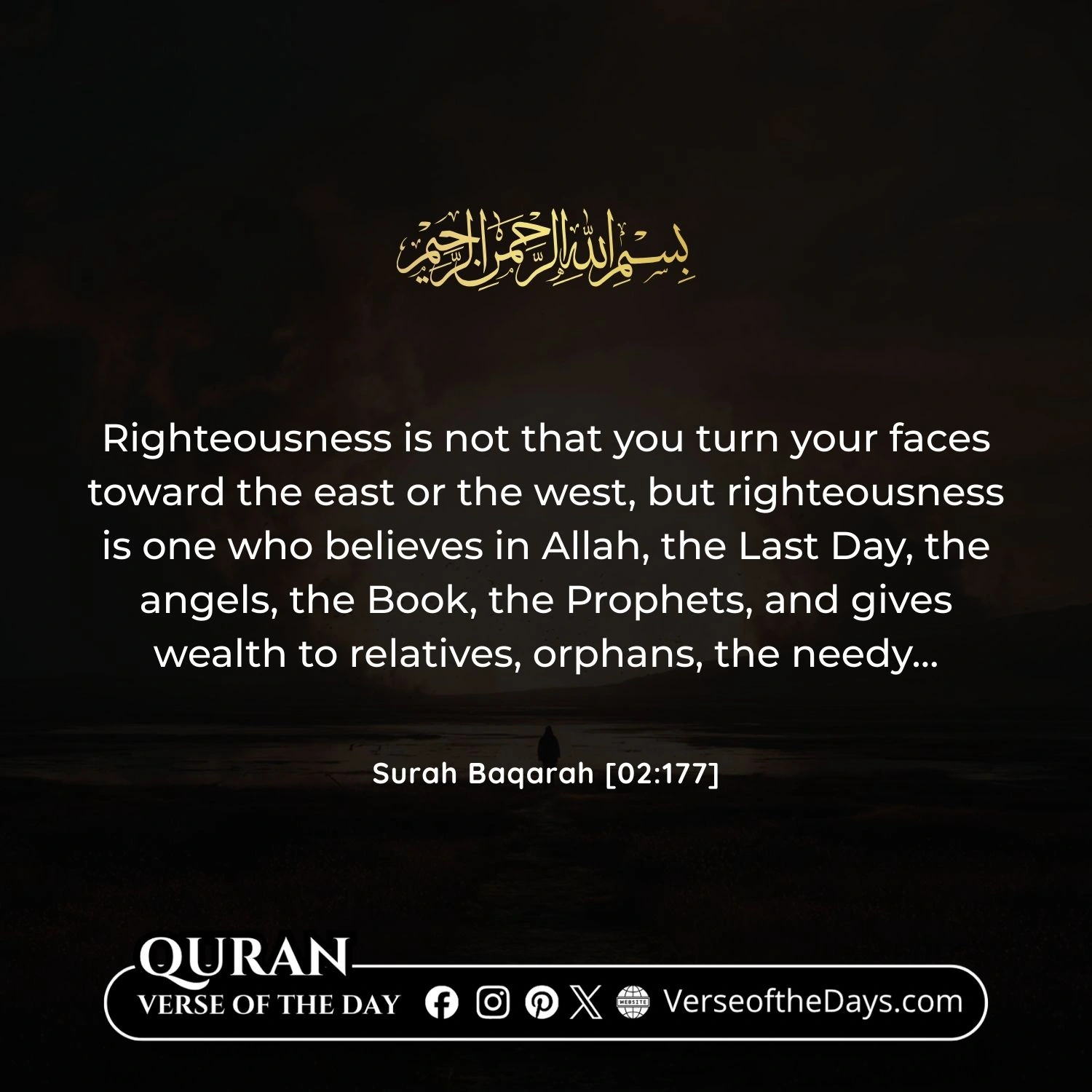
Trust
Whoever Fears Allah, He Will Make a Way Out (65:2–3)
Surah At-Talaq 65:2–3 is the line people search as “whoever fears Allah, He will make a way out.” It is not a slogan for easy money. It is taqwa, a makhraj, unexpected rizq, and tawakkul.
The searches are almost all the same English sentence: “whoever fears Allah He will make a way out,” “He will provide for him from where he does not expect,” “Surah Talaq 65:2–3,” “quran 65 2-3.” People are not looking for 26 November 2025. They are looking for that promise. On this site the ayah already lives on a dated page — and that URL gets tens of thousands of impressions with almost no clicks, because a calendar does not look like the line they heard in a khutbah.
This article is that line, in order. It is Surah At-Talaq (Divorce), verses 2–3. It is not a prosperity caption, a visa spell, or a guarantee that every debt vanishes by Friday. It is taqwa, a way out (makhraj), rizq from a direction you did not budget, tawakkul, and the reminder that Allah’s command reaches its mark and every thing has a qadr.
The ayah in one place
وَمَن يَتَّقِ اللَّهَ يَجْعَل لَّهُ مَخْرَجًا وَيَرْزُقْهُ مِنْ حَيْثُ لَا يَحْتَسِبُ ۚ وَمَن يَتَوَكَّلْ عَلَى اللَّهِ فَهُوَ حَسْبُهُ ۚ إِنَّ اللَّهَ بَالِغُ أَمْرِهِ ۚ قَدْ جَعَلَ اللَّهُ لِكُلِّ شَيْءٍ قَدْرًا
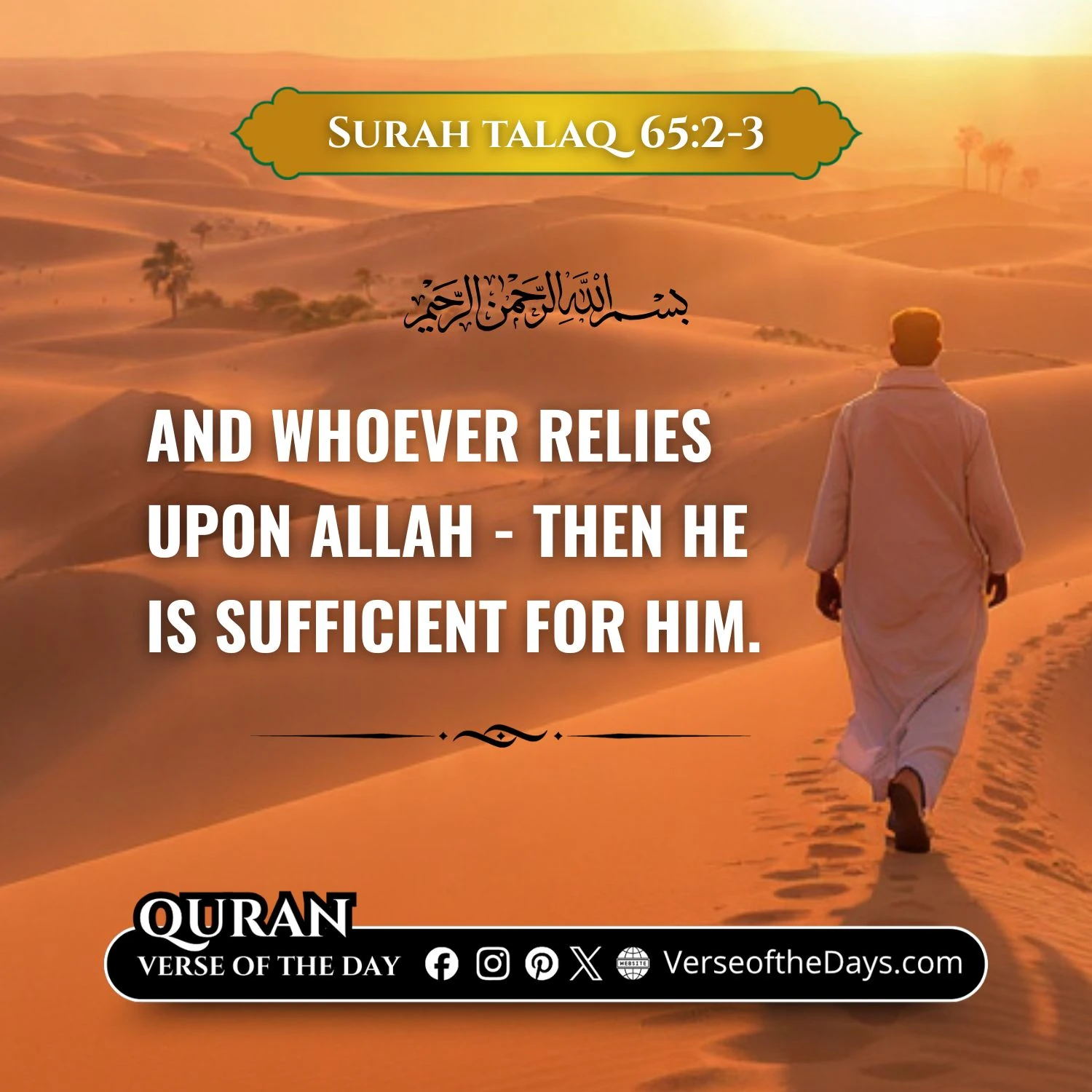
“And whoever fears Allah - He will make for him a way out. And will provide for him from where he does not expect. And whoever relies upon Allah - then He is sufficient for him. Indeed, Allah will accomplish His purpose. Allah has already set for everything a [decreed] extent.”
A common English rendering is: “And whoever fears Allah — He will make for him a way out. And will provide for him from where he does not expect. And whoever relies upon Allah — then He is sufficient for him. Indeed, Allah will accomplish His purpose. Allah has already set for everything a [decreed] extent.” The Urdu on our verse page says the same chain: jo Allah se darte, unke liye nikalne ka rasta; rizq jahan guman bhi na ho; jo bharosa kare, Allah kaafi hai.
It sits in a surah about divorce — that is not an accident
At-Talaq is not a motivational pamphlet. It legislates waiting periods, fairness, and not harming a woman who is leaving or being left. Then Allah places this promise in the middle of that tightness. The first listeners were not daydreaming about a raise. They were in a household that was ending, with money, children, gossip, and fear of the next month. A “way out” here is not a lottery ticket. It is a path through a situation that looks sealed — including, originally, the sealed feeling of a marriage coming apart.
That context protects you from two misuses. One is turning 65:2–3 into a business-bro slogan: fear Allah and the algorithm will pay you. The other is using it as a stick in a dying marriage: “If you had taqwa we would not be here.” The ayah was revealed into difficulty, not as a taunt for people already in it. It tells the God-conscious person that the closed door in front of them is not the whole map.
What “fears Allah” means here
Taqwa in this verse is not panic. It is God-consciousness that changes a choice when nobody is clapping: you do not lie in the settlement, you do not hide money, you do not sleep with a haram “solution,” you do not crush someone’s dignity because you can. Fear of Allah is what you do with power and with panic. If taqwa is only a feeling in taraweeh, 65:2–3 will bounce off the week.
The order in the ayah matters. The way out and the unexpected provision are tied to the person who has taqwa — not to the person who wants an exit while keeping the sin that built the wall. That is not cruelty. It is how a moral universe works. You cannot ask Allah to open a door you keep nailing shut with the other hand.
Makhraj: a way out, not always the way you drew
Makhraj is an exit, a relief, a corridor you could not see from inside the room. Sometimes it is a person who calls. Sometimes it is a delay that saves you. Sometimes it is the strength to walk a lawful, painful path instead of a glamorous unlawful one. The verse does not say the way out will match the Pinterest version of your life. It says Allah will make one for the one who fears Him.
If you are in harm — a violent house, a fraudulent contract, a panic that needs a doctor — this ayah is not a lock. Taqwa includes using the means Allah already put in the world: law, medicine, a trusted elder, a door you are allowed to walk through. Waiting for a miracle while refusing a lawful means is not tawakkul. It is theatre.
Rizq from where you do not expect
“He will provide for him from where he does not expect” is the line that fills Instagram. Rizq in the Quran is broader than a salary. It is provision: food, a job, a skill, a child, rain, an idea, a quiet night, a friend who arrives on time. Unexpected does not mean irrational. It means the ledger you were staring at was too small. Allah is not limited to the invoice you can already see.
It also does not mean you stop working. The same Book that praises tawakkul tells you to tie the camel. Unexpected rizq often arrives through a door that looked ordinary: a lesser job that stays halal, a skill you almost deleted, a relative you had written off. The surprise is Allah’s. The walking is yours. If a post tells you to share 65:2–3 ten times for a cash drop, close it. That is not how revelation talks.
- Taqwa: choosing Allah when the shortcut is ugly and available.
- Makhraj: an exit you could not blueprint from inside the problem.
- Rizq: provision, not only money — and not a spell.
- Tawakkul: relying on Allah after you have used the lawful means in front of you.
The way out is for the one who will not buy relief with a sin. Unexpected rizq is not a substitute for a clean hand.
A working reading of 65:2–3
“Whoever relies upon Allah — He is sufficient”
Hasbuhu: He is enough for him. Tawakkul is not laziness with religious vocabulary. It is handing the outcome to Allah after you have done the next right act. The anxious heart wants a screenshot of next year. This clause answers that hunger without feeding it: you are not required to see the whole corridor. You are required to be His, and to walk.
Sufficiency also cuts against despair. Some people search this ayah because they have already decided they are finished — financially, maritally, medically. The verse does not mock that weight. It relocates it. If Allah is sufficient, the closed human door is not the last word. That is why the next sentences matter: Allah accomplishes His purpose; He has set a measure for every thing. The timeline is His. That can be the hardest clause for a person refreshing a bank app.
Qadr is not an excuse to freeze
“Allah has already set for everything a [decreed] extent” is comfort and a limit. Comfort: this tightness has a size; it is not infinite. Limit: you do not get to bully the unseen into your deadline. People who treat 65:2–3 as a vending machine get angry at Allah when Thursday is still tight. The ayah never offered Thursday. It offered a way out for the God-conscious, provision beyond their map, and a Lord who is enough while the qadr still unfolds.
If the tightness is anxiety that will not let you pray or sleep, you may also need means that are not a verse card: a clinician, a slower day, someone who sits with you. The Quran is guidance, not a substitute for every tool Allah allowed. Hold the ayah and the means together, the way you hold tawakkul and tying the camel.
English, Urdu, and the dated page nobody types
Search Console shows a thicket of queries around this one English cluster and a page — /2025/11/26 — with huge impressions and a CTR near half a percent. Nobody googles a date. They google the promise. This article exists so the words sit in a title, then send you into the actual ayah: Arabic, English, Urdu, tafsir. We also published the same verses on 5 August 2025. Two dates, one door. The archive is the point. A rizq caption that dies in a story is not a way out you can reopen next month.
Read it twice. Once for the chain: taqwa, makhraj, unexpected rizq, tawakkul, Allah’s purpose, qadr. Once for the closed thing in your week — a bill, a visa, a marriage, a sin you keep feeding. If Urdu is the language of your heart, use that tab on the verse page. It is a bridge, not a different Book. If you want a neighbouring reminder on patience while the way out is still unseen, we already wrote about sabr in the Quran. This page is the exit. That page is how to stand in the corridor.
A small practice after you close this page
- Open 26 November 2025. Read the Arabic slowly, then English, then Urdu if that is home.
- Name the wall in front of you in one sentence — without decorating it.
- Name one taqwa act you will not skip this week even if the wall stays: a prayer, a halal no, a withheld harm.
- Use one lawful means you have been calling “not spiritual enough.” Then leave the outcome with Allah.
If you arrived from “Quran verse of the day” or “verse for me today,” this is still one dated ayah, not a horoscope with your salary on it. Sit with At-Talaq 65:2–3. Then return to today’s verse on the homepage. One promise in a tight surah, one ayah for the date: both are enough if you do not turn them into a slogan.
Frequently asked questions
What does “whoever fears Allah, He will make a way out” mean?
It is Quran 65:2–3 in Surah At-Talaq. Taqwa — God-consciousness that changes your choices — is tied to a makhraj (a way out of tightness), rizq from where you do not expect, and Allah’s sufficiency for the one who relies on Him.
Is Surah Talaq 65:2–3 only about divorce?
It is revealed in a surah about divorce and fairness in a breaking home, but the promise is stated generally: whoever has taqwa, Allah makes a way out. The original tightness was family collapse; the wording is not limited to one courtroom.
Does 65:2–3 mean Allah will send money if I share the verse?
No. Rizq is provision, not a social-media spell. The ayah ties unexpected provision to taqwa and tawakkul, not to forwarding a graphic. Unexpected does not mean you stop using lawful work and means.
Where can I read 65:2–3 in Arabic, English, and Urdu on this site?
Open the dated verse page for 26 November 2025. The same verses also appear on 5 August 2025. Each URL keeps the Arabic, translation, and tafsir after midnight.
If I have taqwa, why is my problem still here?
The ayah also says Allah accomplishes His purpose and has set a measure for every thing. A way out is promised; your deadline is not. Keep the next right act, use lawful means, and do not treat delay as proof that the verse is empty.