Surah Al-Najm, Ayah 39-41
وَأَن لَّيْسَ لِلْإِنسَانِ إِلَّا مَا سَعَىٰ وَأَنَّ سَعْيَهُ سَوْفَ يُرَىٰ ثُمَّ يُجْزَاهُ الْجَزَاءَ الْأَوْفَىٰ
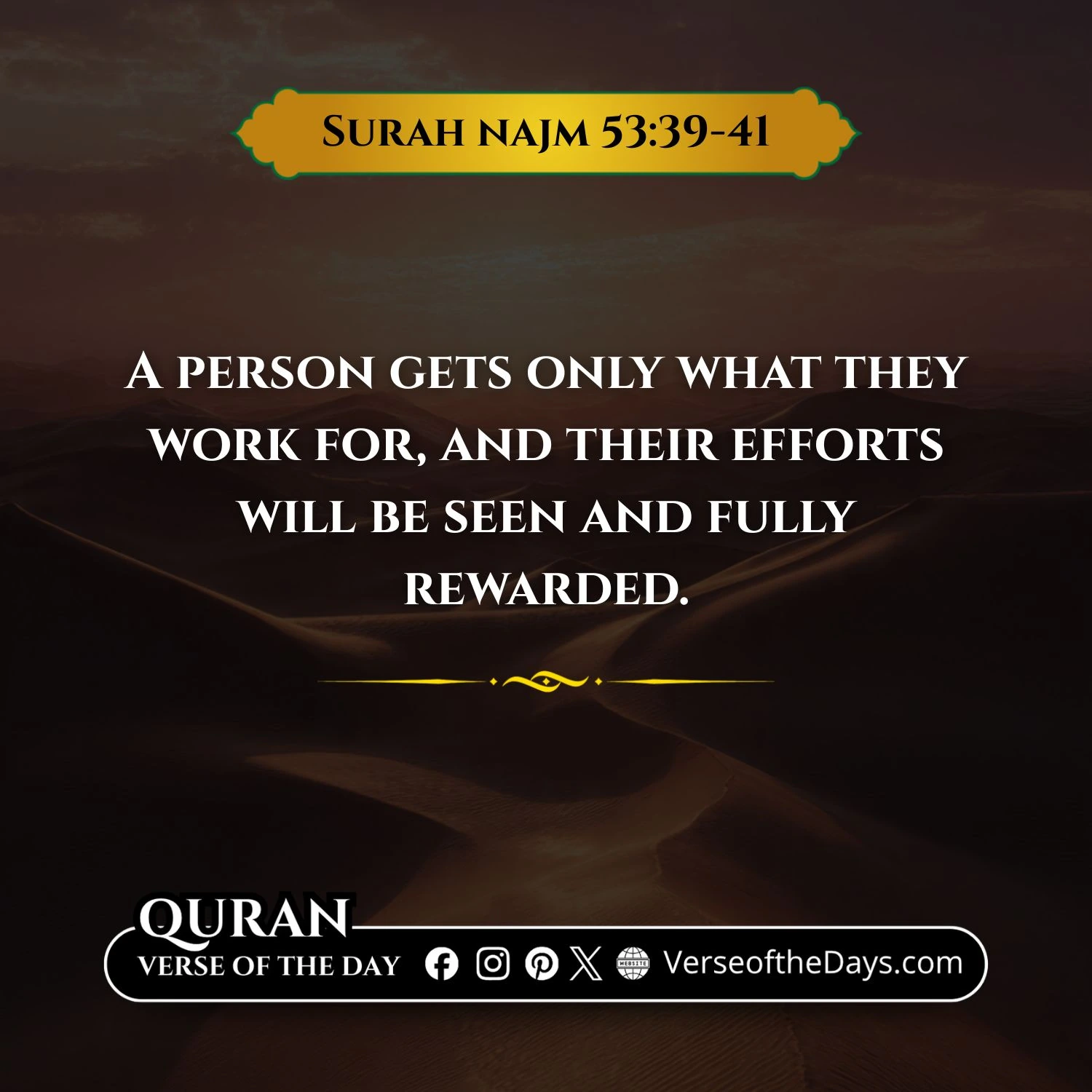
And that man will have nothing except what he strives for, And that his effort is going to be seen, Then he will be recompensed for it with the fullest recompense.
اور یہ کہ انسان کے لیے وہی ہے جس کی اس نے کوشش کی، اور یہ کہ اس کی کوشش عنقریب دیکھی جائے گی، پھر اسے اس کا پورا پورا بدلہ دیا جائے گا۔
Explanation
These verses establish the fundamental principle of individual responsibility and the direct relationship between effort and reward. They teach that each person will be rewarded based on their own striving, not the actions of others. The verses emphasize three sequential truths: first, that humans only truly possess what they have earned through their own efforts; second, that all human striving will be made visible and examined; and third, that each person will receive the complete recompense for their deeds. This teaching encourages personal accountability, discourages dependence on others' merits, and motivates sincere effort by assuring that no action, however small, will be overlooked in the divine accounting.
Context
These verses appear in Surah Al-Najm (The Star) amid discussions of divine revelation and judgment. They establish core principles of individual responsibility that are central to Islamic theology and ethics.