Surah An-Nur 24:27 (part)

Wednesday, 28 January 2026

3

يَا أَيُّهَا الَّذِينَ آمَنُوا لَا تَدْخُلُوا بُيُوتًا غَيْرَ بُيُوتِكُمْ حَتَّىٰ تَسْتَأْنِسُوا وَتُسَلِّمُوا عَلَىٰ أَهْلِهَا ...

0:00 / 0:00

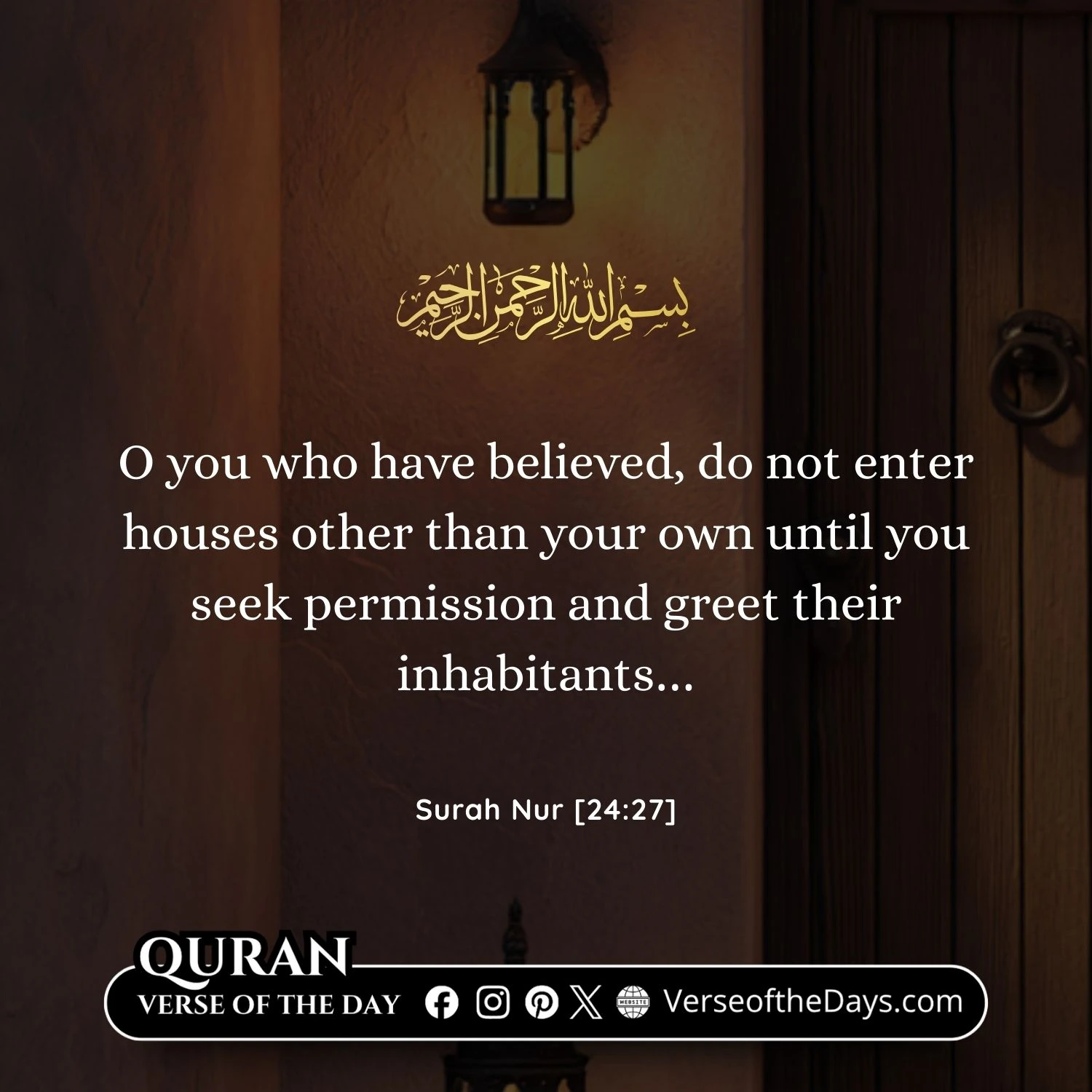
"O you who have believed, do not enter houses other than your own until you seek permission and greet their inhabitants…"

اے ایمان والو! اپنے گھروں کے سوا دوسرے گھروں میں داخل نہ ہوا کرو جب تک اجازت نہ لے لو اور ان کے رہنے والوں کو سلام نہ کر لو…

Explanation

The demands of social life require people to meet each other frequently. One way for such a meeting to take place is for a visitor to go to the home of an acquaintance and, without giving any prior notice, walk straight into his house. This is troublesome for both the intruding guest and the householder. Therefore, taking advance permission has been included in the rules of social conduct. If possible, the better course would be for the visitor to take a prior appointment with the person he intends to visit and then when he arrives, seek the host’s permission before entering. Depending upon the cultural environment, there could be different ways of seeking permission, but in every case, observance of Islamic decency is most essential. Islam wants all the dealings of the social life of a community to be based on consideration for others. The same sensibility should be observed with regard to meetings. If you go to meet someone, and that person, for some reason, wants to be excused from meeting you at that time, then you should return without any ill-feeling. However, this rule does not apply to those public places where, in principle, there is general permission for entry.

— Source: Tazkirul Quran (Maulana Wahiduddin Khan) via Quran.com (24:27)

Context

Foundational adab for communal living and safety.

Explore by theme

More Quran verses on these topics — keep reading:

Browse all Privacy verses
USA Jobs – Apply on JobWisher
Islamic Quiz

Learn. Play. Grow in Deen.

Daily new Islamic quizzes to boost your knowledge and consistency.

Start Quiz