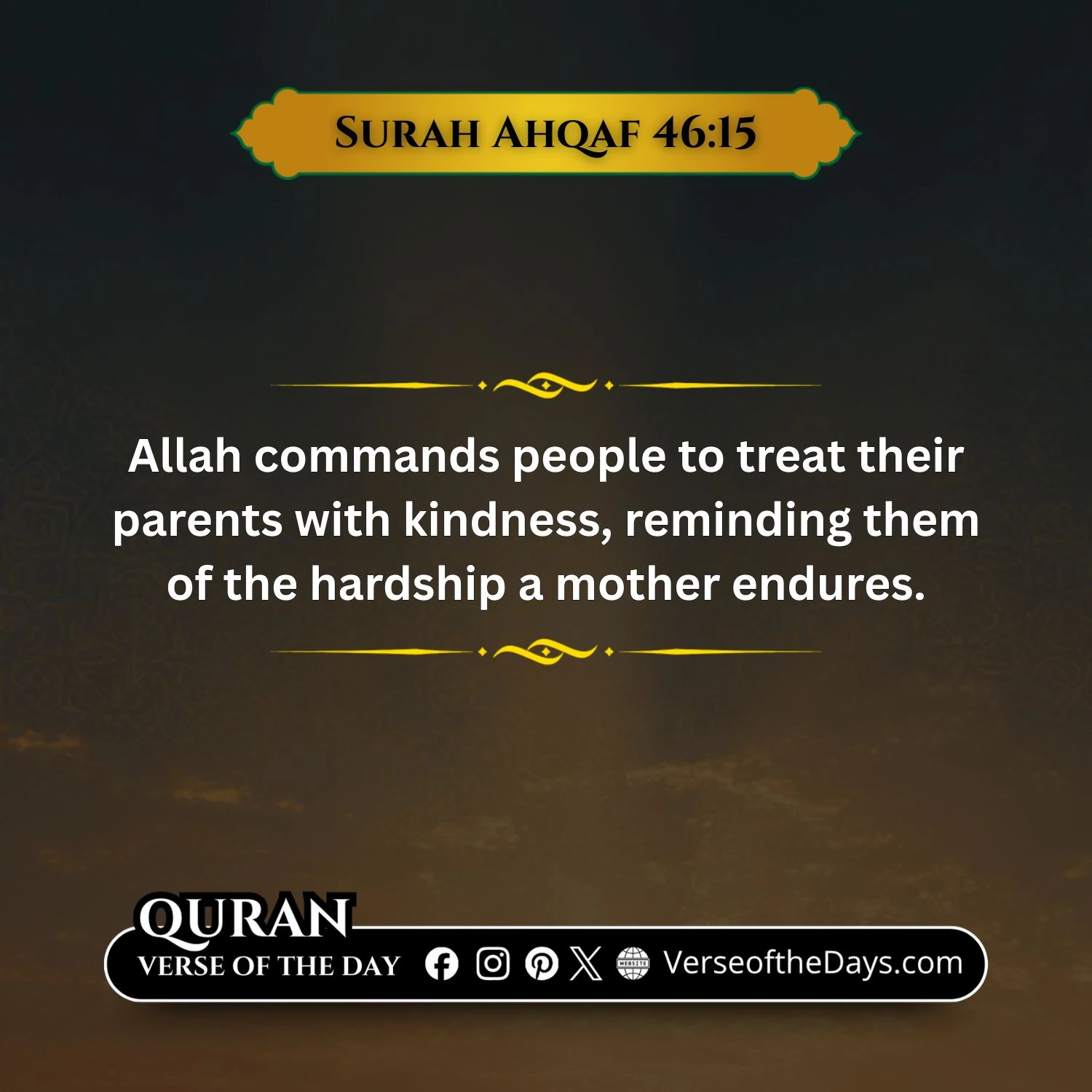
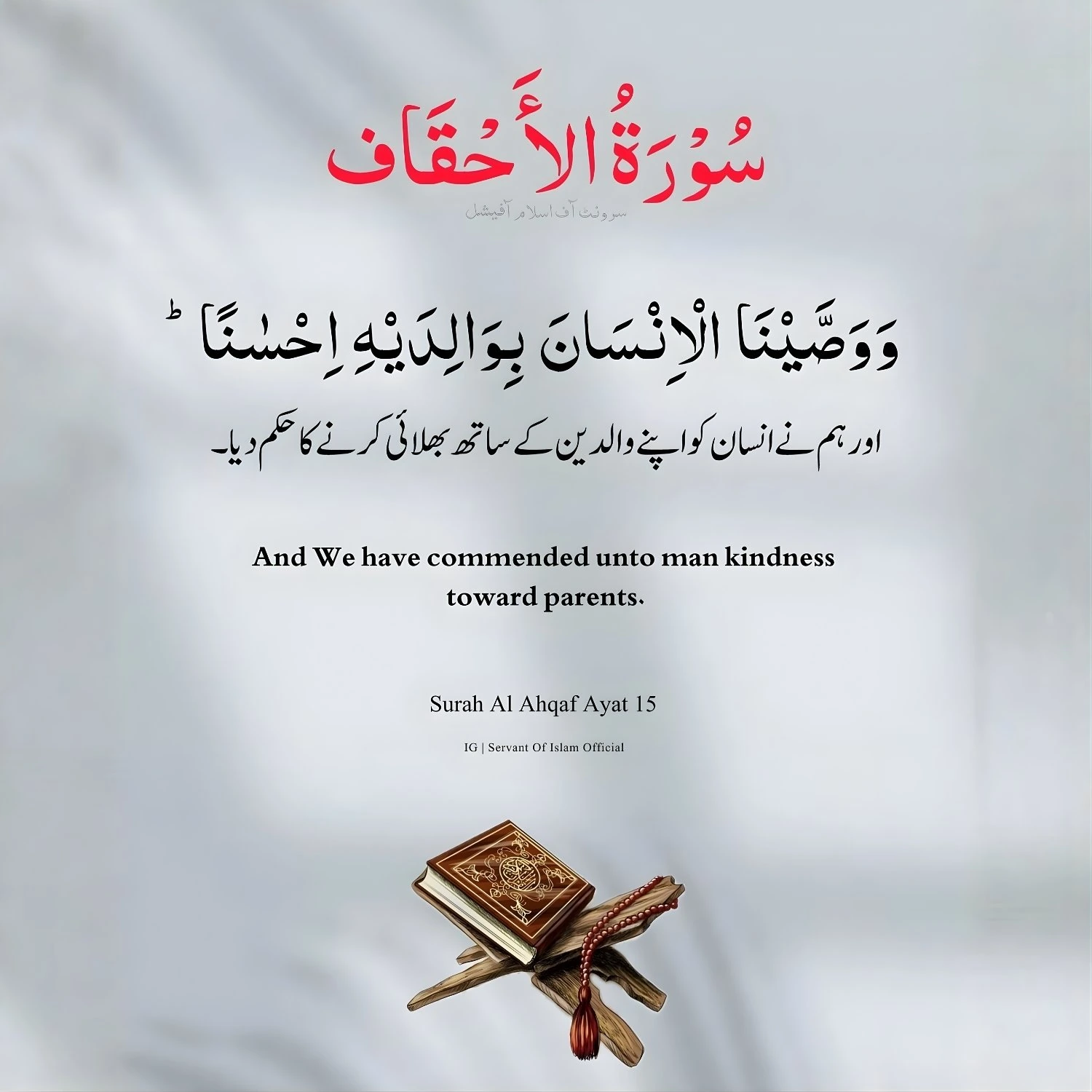
وَوَصَّيْنَا الْإِنسَانَ بِوَالِدَيْهِ إِحْسَانًا ۖ حَمَلَتْهُ أُمُّهُ كُرْهًا وَوَضَعَتْهُ كُرْهًا ۖ وَحَمْلُهُ وَفِصَالُهُ ثَلَاثُونَ شَهْرًا ۚ حَتَّىٰ إِذَا بَلَغَ أَشُدَّهُ وَبَلَغَ أَرْبَعِينَ سَنَةً قَالَ رَبِّ أَوْزِعْنِي أَنْ أَشْكُرَ نِعْمَتَكَ الَّتِي أَنْعَمْتَ عَلَيَّ وَعَلَىٰ وَالِدَيَّ وَأَنْ أَعْمَلَ صَالِحًا تَرْضَاهُ وَأَصْلِحْ لِي فِي ذُرِّيَّتِي ۖ إِنِّي تُبْتُ إِلَيْكَ وَإِنِّي مِنَ الْمُسْلِمِينَ
"And We have enjoined upon man, to his parents, good treatment. His mother carried him with hardship and gave birth to him with hardship, and his gestation and weaning [period] is thirty months. [He grows] until, when he reaches maturity and reaches [the age of] forty years, he says, "My Lord, enable me to be grateful for Your favor which You have bestowed upon me and upon my parents and to work righteousness of which You will approve and make righteous for me my offspring. Indeed, I have repented to You, and indeed, I am of the Muslims.""
اور ہم نے انسان کو اپنے والدین کے ساتھ احسان کرنے کا حکم دیا ہے۔ اس کی ماں نے اسے تکلیف کے ساتھ اٹھایا اور تکلیف کے ساتھ جنا، اور اس کا حمل اور دودھ چھڑانا تیس مہینے ہے۔ یہاں تک کہ جب وہ اپنی پختگی کو پہنچا اور چالیس سال کا ہوا تو کہا، 'اے میرے رب! مجھے توفیق دے کہ میں تیری اس نعمت کا شکر کروں جو تو نے مجھ پر اور میرے والدین پر کی ہے اور یہ کہ میں ایسا نیک عمل کروں جس سے تو راضی ہو، اور میری اولاد میں بھی اصلاح کر دے۔ بے شک میں نے تیری طرف توبہ کی ہے اور بے شک میں مسلمانوں میں سے ہوں۔'
Explore by theme
More Quran verses on these topics — keep reading:
Browse all Parental Rights verses